
Dear fellow sojourners,
The inquiry continues.
Episode Two of Understanding Players is now available, continuing Aetherborne Creations’ exploration of player motivation, game design, and the experiences that games are built to create. Its central argument is simple: players are not fixed types.
Players Are Not Fixed Types
Player typologies have given game designers and researchers useful ways to describe recurring patterns in play. They become less useful, however, when categories intended to describe tendencies are treated as permanent boxes.
A player may seek a difficult challenge one day and somewhere quiet to unwind the next. Achievement and immersion can matter at the same time. Someone may enjoy playing socially while having little interest in competition. Context, mood, experience, the game itself, and the people around us can all change what we seek from play.
Episode Two develops that idea through a simple design question:
What is this player looking for from this experience right now?
That question moves our attention away from deciding what kind of person a player permanently is, and towards considering what an experience can meaningfully provide.
Novelty also enters the discussion. Something unfamiliar may capture our attention: a new mechanic, place, role, challenge, or group of people. Yet novelty is not necessarily the satisfaction itself. What matters afterwards is what that new experience enables us to discover, master, express, share, or simply enjoy.
From the Research Trail
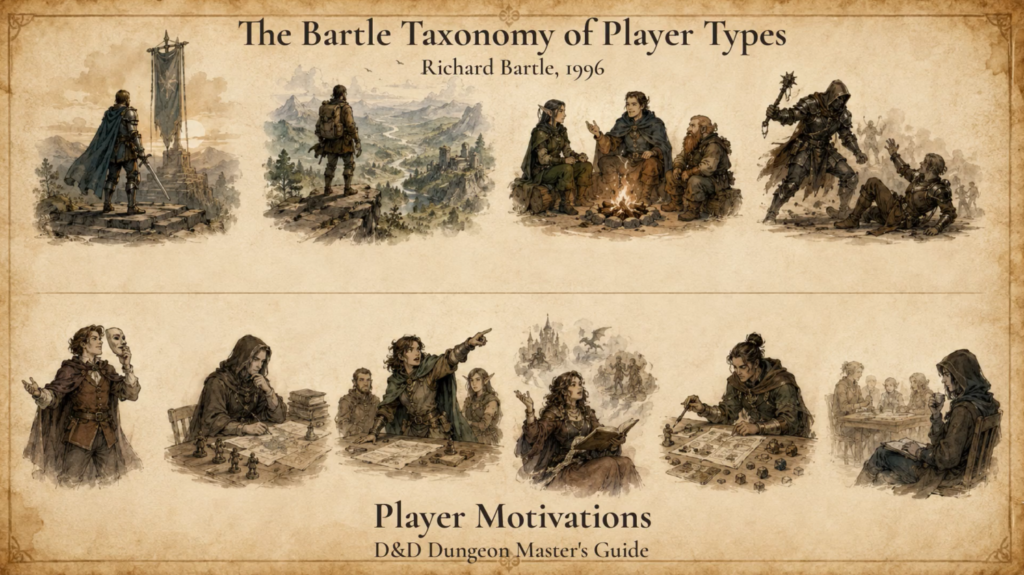
Producing Understanding Players has also continued to widen the research trail behind the series.
During the production of Episode Two, after the episode’s framework and argument had already been developed, we encountered further comparative work including Hamari and Tuunanen’s Player Types: A Meta-synthesis and Fritz and Stöckl’s Why do We Play? Towards a Comprehensive Player Typology.
These works were not sources from which Episode Two or Aetherborne Creations’ existing framework were derived. Their value to us is subsequent: they provide additional points of comparison for examining where different traditions of player research converge, where they disagree, and how the methods used to study players influence the categories and motivations that emerge.
That comparative investigation is now becoming a research project of its own. Rather than simply accumulating more typologies, we are interested in understanding what different models were built to measure, why researchers arrived at different structures, and what those distinctions mean when translating research into practical game-design thinking.
Episode Two therefore represents both a continuation and a useful boundary: the published episode presents the argument we developed, while the literature discovered during production opens further questions for later work rather than being retroactively folded into its provenance.
Where We Go Next
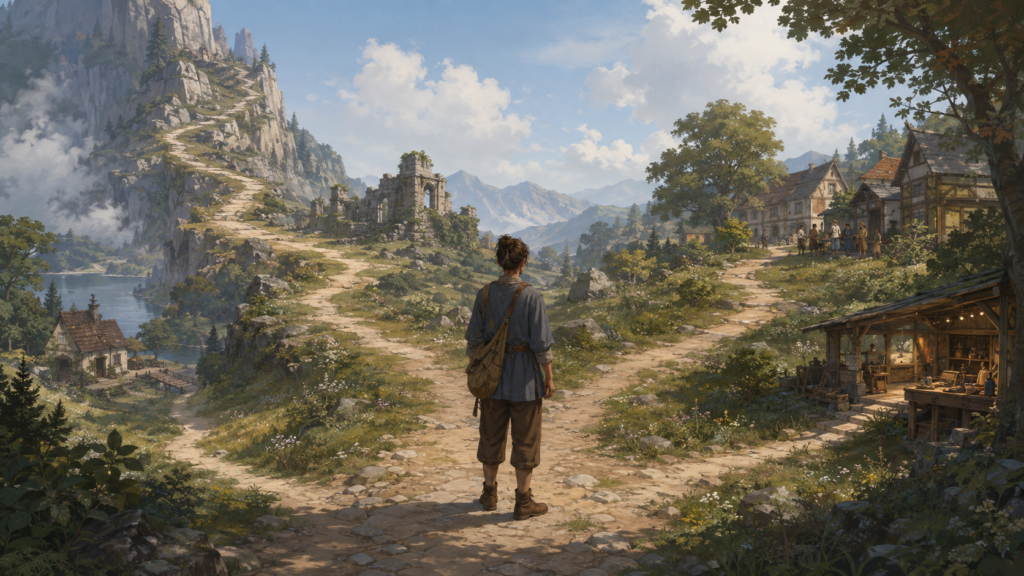
The next episode begins moving into the individual motivations in greater detail, starting with mastery and achievement: the pleasure of becoming capable.
As the series develops, these episodes will continue to support Aetherborne Creations’ wider work in games, game analysis, development discussion, and design-led creative projects.
Those working across games, player research, serious games, or related creative fields are also welcome to connect with us through Aetherborne Creations’ collaboration pathway.
Thank you for following the inquiry.